

Summit Camper


Summit Camper
Configure Your Camper
- Lead time
- Full details →
- Truck measurements
- See what we may need →
- Delivery options
- Installed vs. disassembled →

Weight
480–570 lbs
Varies by bed length
Sleeping platform
87″ × 72″
Full-size. Mid-size is 87″ × 68″
Standing height
6′7″ to 7′+
Varies by truck and canopy height
Camper width
77″ / 71″
Full-size / mid-size
Pop-up length
118″
Optional extension to 134″
Van space.
Truck footprint.
The Summit gives you a ton of extra room over a wedge, without the weight, the height, or the price of a hard-side slide-in. Pop it up in under a minute. Drive it into the garage on the way home.
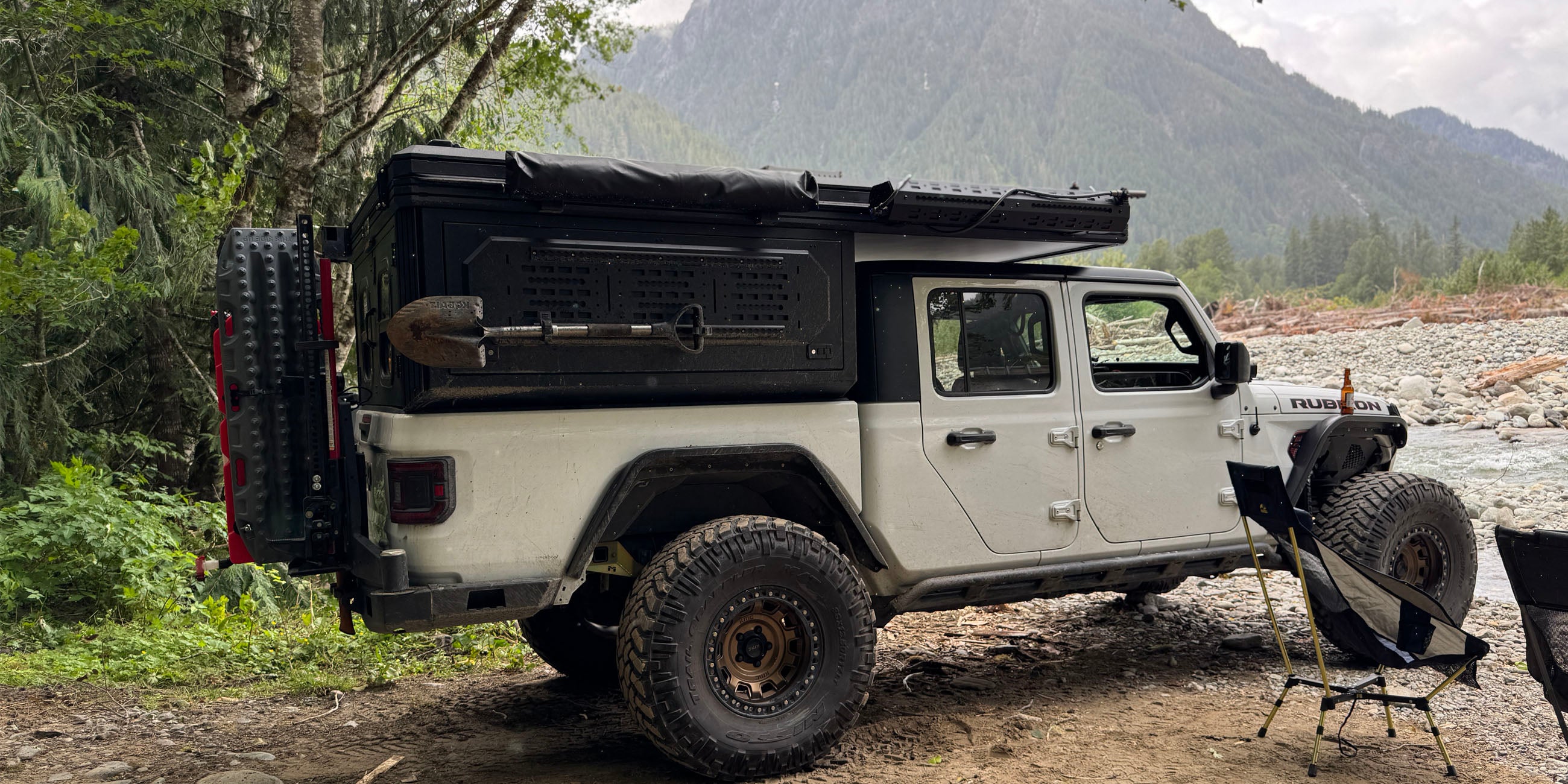
Wide body. Low profile.
Every Summit comes with all of this
Clamp-on mounting
Bed clamps included. No drilling into your truck bed.
Three gull-wing hatches
All lockable, all openable from the inside.
Six three-layer windows
Bug mesh, privacy panel, and clear weather layer, each independently controlled.
Sleeping platform
Extra-wide platform with 2″ high-density foam mattress.
USB lighting
Interior lighting plus internal cable channels for your own wiring.
Interior MOLLE panels
Mount gear anywhere inside without drilling.
Heater and AC ports
Pre-installed in the canvas, ready for a diesel heater or AC unit.
2-year warranty
24 months of coverage. See full details.
Two ways to get it
Same camper either way. The difference is who puts it together and puts it on your truck.
Installed in Monroe, WA
$8,995
Pick it up at our shop and installation is free. We fully assemble the camper here, mount the camper, check every seal and fastener, and walk you through the whole thing before you leave.
Disassembled shipment
$7,995, save $1,000
Ships free, direct from our factory, in two crates anywhere in the contiguous US. You assemble and mount it yourself with basic hand tools, plus a forklift, gantry, or four to five people to lift the pop-up onto the canopy.
Roof fans cannot be shipped disassembled, but we can ship with a 14x14 fan cutout. Gear panels ship loose for you to install. See the assembly instructions or shipping details.
Four things that make the Summit different
Wide-body canopy
Most pop-ups stop at the bed rails. The Summit runs 77 inches wide on a full-size truck and 71 on a mid-size, which buys you a genuinely wider sleeping platform and real floor space for gear you would otherwise leave behind. The extra width comes from the canopy geometry, not from a heavier structure, so the Summit still lands hundreds of pounds under a comparable slide-in.
Three-layer window system
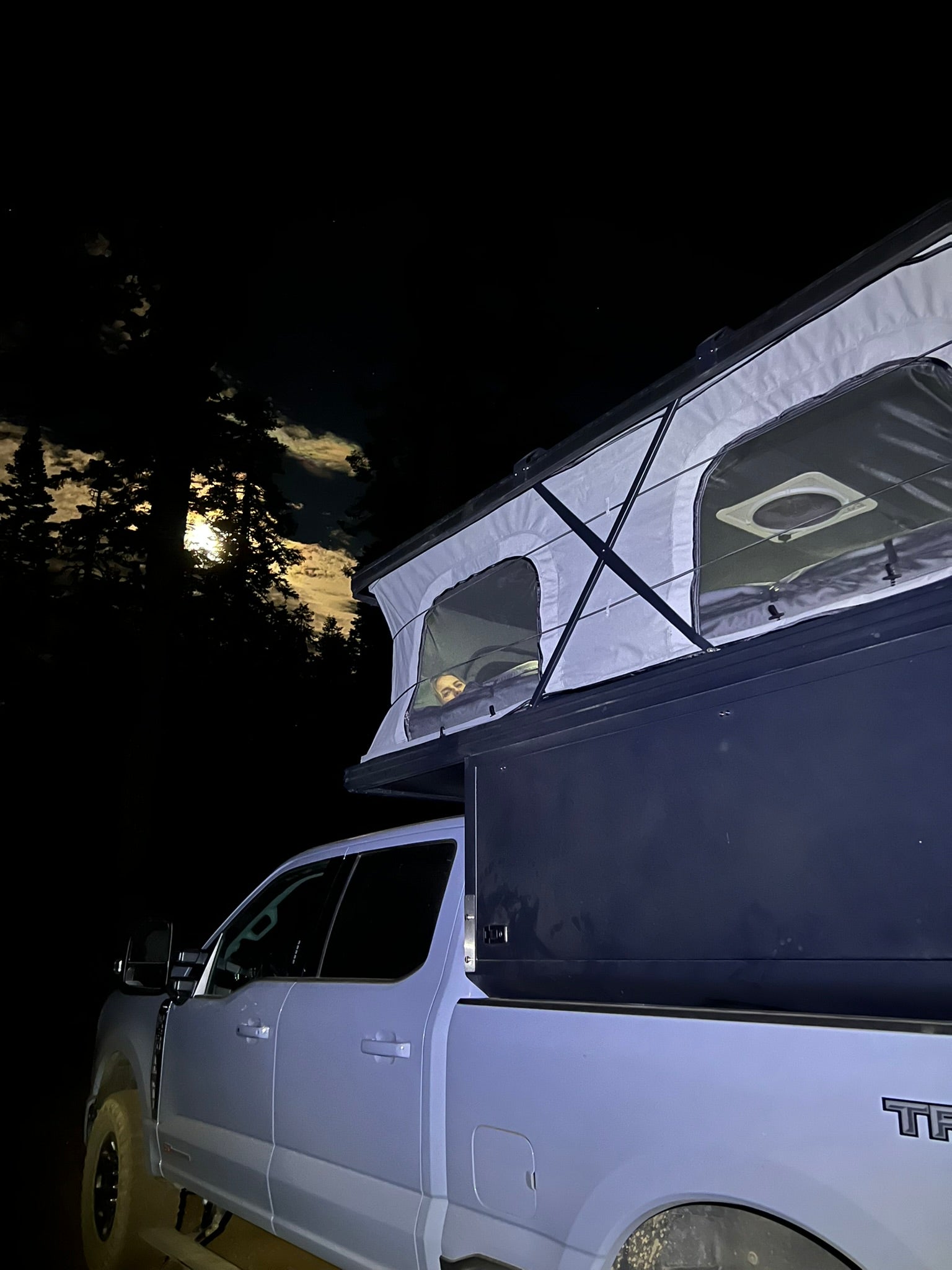
Six large windows wrap the tent for 360-degree views. Each one carries three independent layers: bug mesh, a blackout privacy panel, and a clear PVC weather layer. Every layer gets its own tie-down, so you can run any combination you want. Mesh only on a warm night, privacy up and clear down in a storm, everything open at sunrise.
Bonded 360 GSM canvas
The tent is 360 GSM ripstop polyester, bonded rather than only coated, so water does not wick through the weave under sustained rain. Diesel heater and AC ports are built into the canvas at the factory, not cut in later. The floors are 1-inch aluminum composite panel rated to 475 pounds.
Bolted four-panel aluminum shell
The canopy is 1/8-inch 5000-series aluminum, powder-coated for corrosion resistance. The pop-up structure is 6000-series. The four panels are precision-cut and bolted rather than welded, which keeps tolerances tight and means a damaged panel can be replaced instead of scrapping the shell. The roof is aluminum composite over a framed substructure, then coated in polyurea for impact resistance and a fully sealed surface.
See it before you buy it
Start with the full walkthrough, then the rest of the playlist covers how the Summit sets up, how it is built, and what it is like to live with.
Room to actually live in, on a truck you still want to drive
The Summit is for the trip that lasts longer than a weekend. Two people and a dog, or two adults and two kids, or one person and a mountain of gear. A wedge works until the second night, when you are both trying to get dressed in the same three feet of air.
Popped up, you get plenty of standing height and an 87 by 72 inch sleeping platform on a full-size truck. That is a real east/west bed with room. Popped down, the Summit sits low enough to keep your fuel economy intact and your garage door usable.
Everything that touches weather is stainless: hardware, fasteners, hinges. Hydraulic gas struts lift the roof, so raising it is a simple job. Weatherstripping runs the full perimeter of every hatch. The build is designed around the assumption that you will use it hard, in the rain, for years.
Pick it up in Monroe and installation is free: we fit bed clamps to your specific truck, mount the camper, and walk you through it before you leave. Or take the disassembled shipment, free from our factory, and put it together yourself.
Build your Summit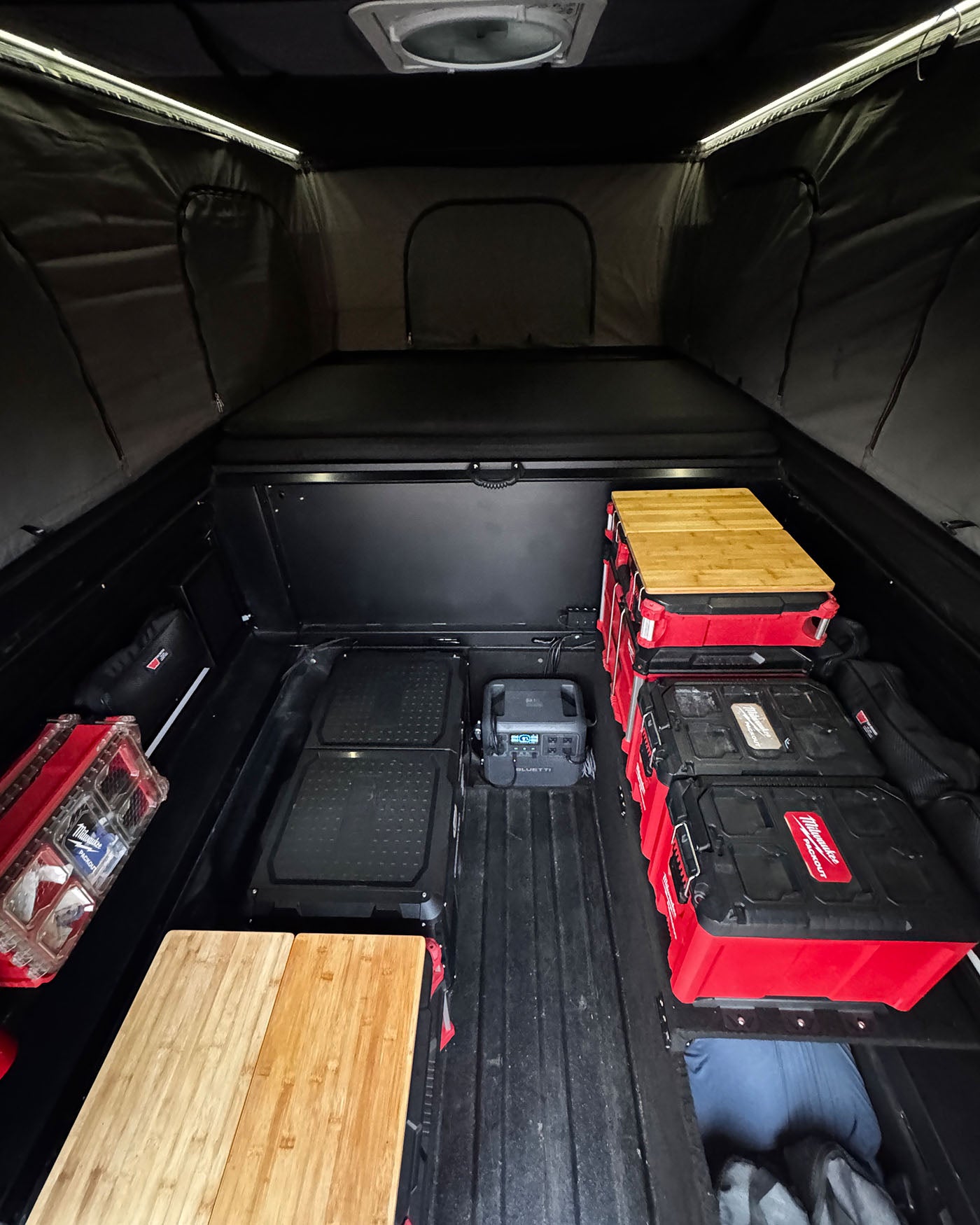
Living in it
- How many people actually fit?
- Three to four comfortably. The full-size platform is 87 by 72 inches, which is comparable to a california king, with 2-inch high-density foam mattress across the whole thing. On a full-size truck you get 6 feet of east/west sleeping space.
- What is the mattress like?
- Two inches of high-density foam, cut to the platform. It is flat, firm, and perfectly fine for a weekend, and we are not going to tell you it is something it is not. Plenty of owners never change it. If you sleep cold or sleep badly, the platform is flat and a standard shape, so a topper or a pad you already like drops right on with no modification. Nothing to remove and nothing to work around.
- Can I stand up in it?
- Yes. Standing height runs 6 feet 7 inches to just over 7 feet depending on your truck and canopy height. You can change clothes, cook at the tailgate, and move around without crawling.
- What is already wired in?
- USB lighting, internal cable channels for running your own accessories, interior MOLLE panels, and pre-installed ports for a diesel heater or an AC unit. Exterior gear panels, solar, and a ventilation fan are all options.
- How does it handle cold?
- The heater port is factory-installed in the canvas, so a diesel heater drops straight in. Add the thermal-quilted tent liner for shoulder season and winter, and the three-layer windows let you shut down airflow completely without losing the ability to vent condensation.
Living with it
- What does it do to my payload?
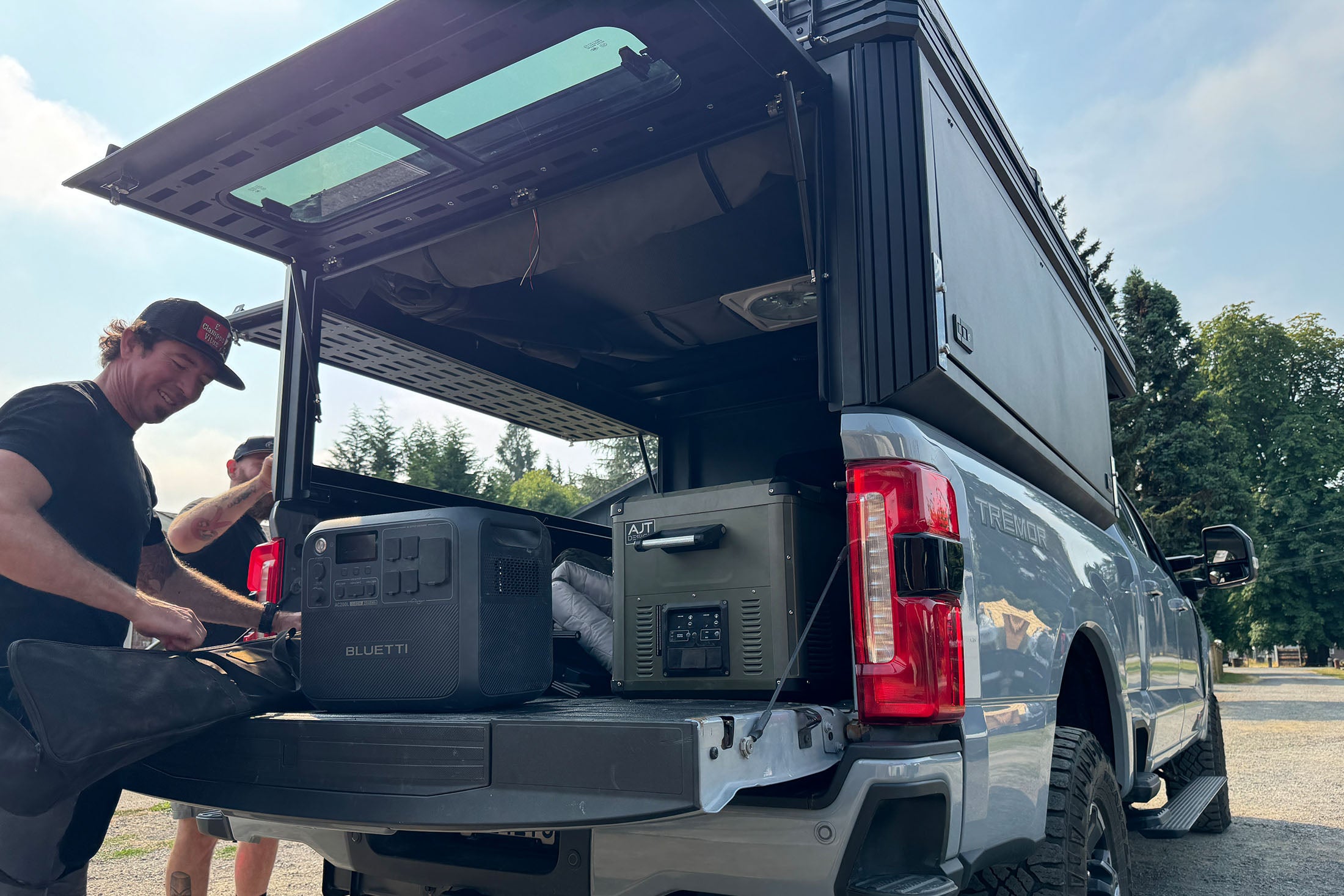
- The Summit runs 480 to 570 pounds depending on bed length. That is roughly a third of a comparable hard-side slide-in, so most half-ton trucks carry it with payload left over for water, gear, and passengers.
- How is it attached?
- Clamp-on, using bed clamps. No drilling into the bed, and it comes off with hand tools if you need the truck back. With a Monroe install we fit the clamps to your truck. With a disassembled shipment you position and clamp it yourself, following the mounting steps.
- How fast is setup?
- Hydraulic gas struts do the work. Release the latches, lift, and you are standing up inside in under a minute. Closing it is the same in reverse.
- Do I want the standard or extended cabover?
- Depends on your bed length and whether you haul gear under the platform. See the side-by-side breakdown.
- Will it fit my truck?
- The Summit fits most mid-size and full-size trucks. Some trucks need a couple of quick measurements to guarantee the fit, and if yours does, we will reach out after you order. See what we may need.
What’s under the hood
Tent & canvas
- 360 GSM ripstop polyester canvas, bonded for waterproofness
- 1″ aluminum composite panel tent floors rated to 475 lbs
- Six large windows for 360° views, each with bug mesh, privacy panel, and clear PVC weather layer
- Every layer has its own tie-down, so you can run any combination independently
- Pre-installed diesel heater and AC ports built into the canvas
Canopy & structure
- Canopy: 1/8″ 5000-series aluminum, powder-coated for corrosion resistance
- Pop-up structure: 6000-series aluminum
- Four-panel canopy assembly, precision-fit and bolted for strength
- 1″ aluminum composite panel roof with framed substructure for rigidity
- Polyurea-coated roof for impact resistance and a fully sealed surface
The numbers
Exact dimensions depend on your truck make, model, and bed length. The figures below are the base measurements we build to.
Full-size
77″ wide canopy · 87″ × 72″ sleeping platform · 118″ pop-up length
Mid-size
71″ wide canopy · 87″ × 68″ sleeping platform · 118″ pop-up length
Extension
Optional pop-up extension takes overall length to 134″. Standard vs extended
Weight
480 to 570 lbs, depending on bed length and options
Full-size
Plan view, cab end at left. The 87″ platform splits in half. The front 44″ is fixed over the cab. The rear 44″ slides forward and stacks on top of it, opening the bed back up for gear.
Mid-size
Same 87″ platform, same split, same 118″ pop-up. The mid-size loses 6″ of canopy width and 4″ across the platform.
Drawn to scale, with the sliding half shown stowed. Both diagrams show the standard 118″ pop-up. The optional extension adds 15.75″ out over the cab for 134″ overall, which moves the platform forward rather than making it longer. Standard vs extended.
Standard or extended cabover
The Summit’s sleeping platform is 87 inches long and splits into two sections. The front section is fixed. The rear section slides forward and stacks on top of it, opening your truck bed back up for gear when you are not sleeping. How much of the fixed section sits inside your bed depends on your bed length and which cabover you choose.
Standard, 118 inches
The default build, and it fits every bed length we build for. On beds 6 ft and longer, part of the fixed platform sits inside the bed and stays there.
Extended, 134 inches
Adds 15.75 inches, 400 mm, of length out over the cab. That pushes the platform forward and gives your bed space back. Best on longer beds.
Standard, 118″
Side view. The fixed half hangs about 12″ past the front of the bed, so that much of the bed stays taken up.
Extended, 134″
The extra 15.75″ pushes everything forward over the cab, so the fixed half clears the front of the bed on this truck.
Both drawn on a 6.75 ft bed at the same scale. On a shorter bed the standard cabover clears too, on an 8 ft bed neither one does. The table above has the figure for your bed length.
How much bed space each one costs you
| Your bed | Standard | Extended |
|---|---|---|
| 5 ft | Bed fully clear | Bed fully clear |
| 5.5 ft | Bed fully clear | Bed fully clear |
| 6 ft | About 3 inches into the bed | Bed fully clear |
| 6.5 ft | About 9 inches into the bed | Bed fully clear |
| 6.75 ft | About 12 inches into the bed | Bed fully clear |
| 8 ft | About 28 inches into the bed | About 12 inches into the bed |
Figures are approximate and vary by truck.
Reference photos

Platform into bed
Standard cabover on a 6.75 ft F-250. About 12 inches of the fixed platform sits inside the bed.

Overhang measured
The same overhang with a tape on it, confirming roughly 12 inches on a 6.75 ft bed.

Platform length, 87 inches
Both sections combined, measured front to back.

Platform width, 71 inches
Wall to wall across the sleeping surface on a full-size truck.
On a 5 ft, 5.5 ft, or 6 ft bed, go standard. Extended gains you nothing except about 3 inches back on a 6 ft bed.
On a 6.5 ft bed or longer, if you haul gear, bikes, or dogs in the bed, extended is worth it.
Side walls and hatches
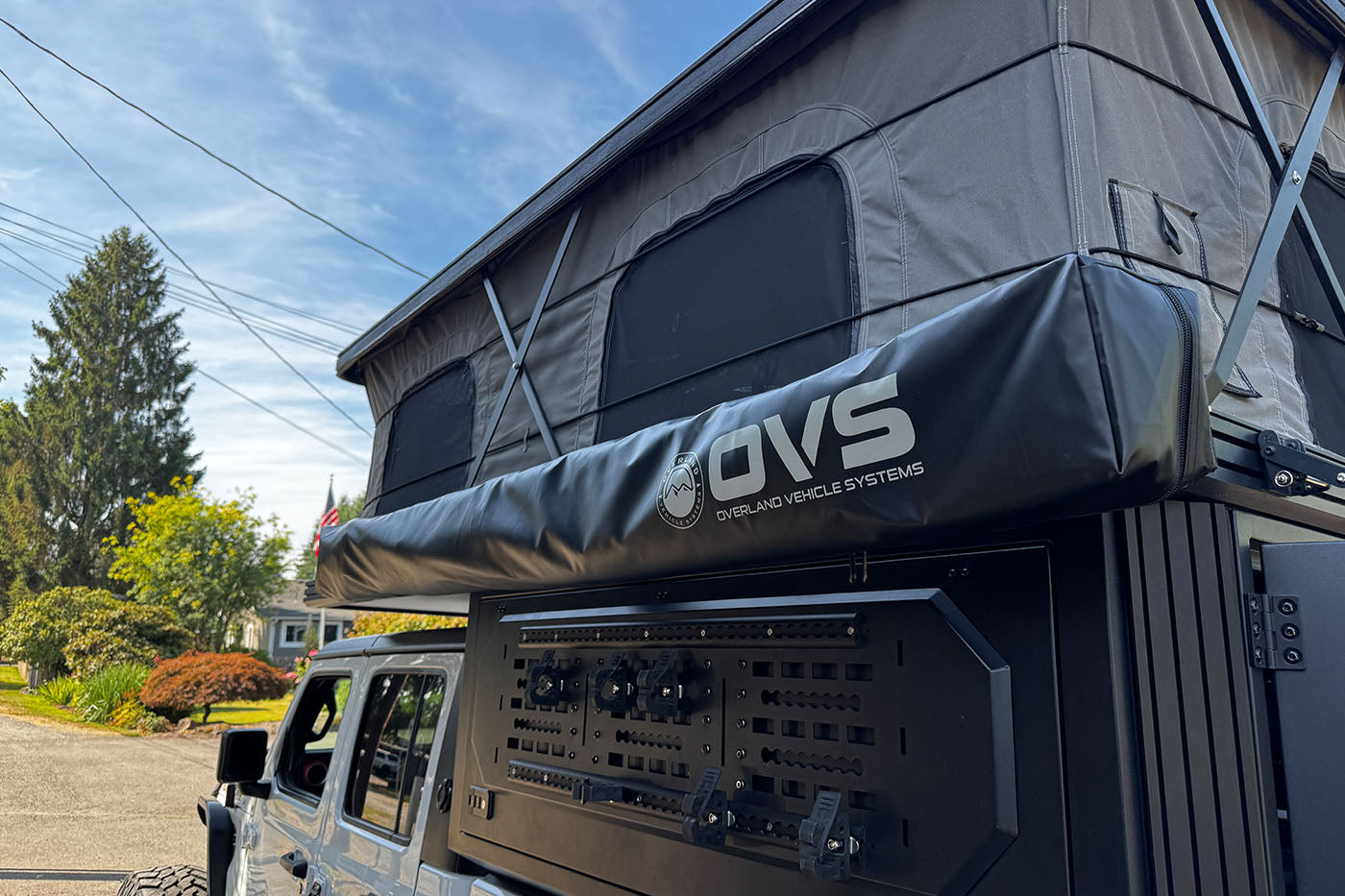
Three gull-wing hatches are standard, and how you finish the side walls is up to you. Leave them plain, hang gear on the outside, put opening windows in the hatches, or go to glass.
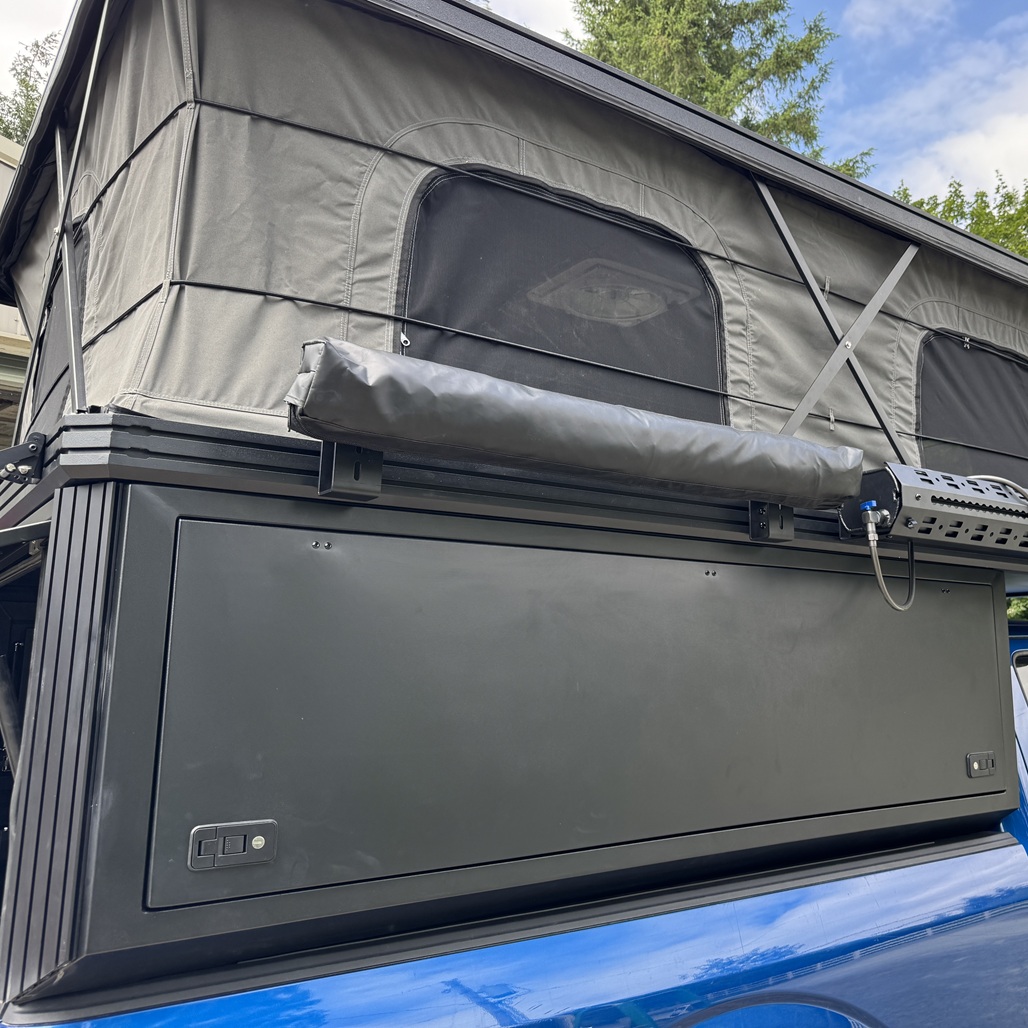
Standard hatch
The default. Solid gull-wing hatches, lockable, openable from the inside, weatherstripped all the way around. Nothing to snag, nothing extra to seal, and the full run of interior MOLLE stays available.

Exterior gear panels
Moves the bulky, dirty, and flammable gear outside. The panels take dual RotopaX, MaxTrax MKII, and L-track, and they are a natural fit for QuickFist clamps on an axe, a shovel, or a traction board strap.
Mounted with M8 hardware into rivnuts, so the panels come off with a hex key if you ever want the wall bare again. On a disassembled shipment they ship loose, and you drill the hatches and set the rivnuts yourself.
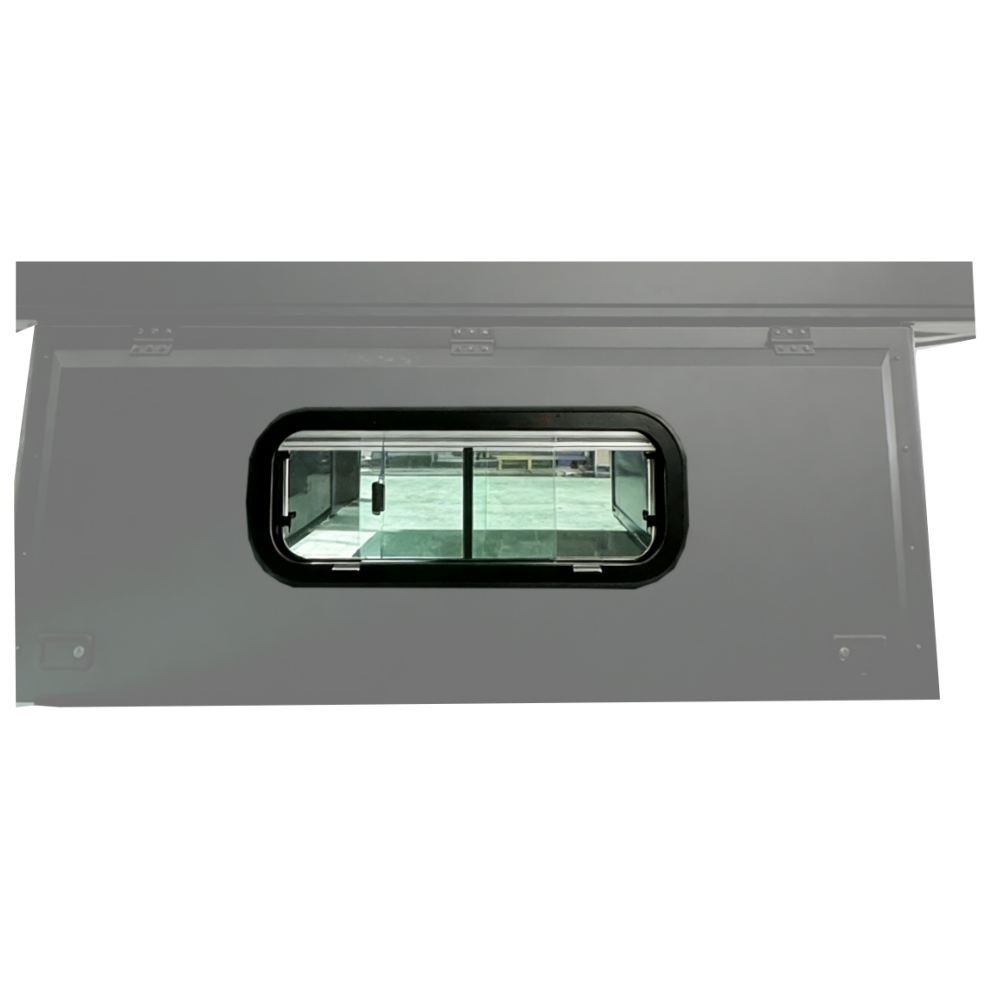
Sliding windows
Windows set into the side hatches themselves. They open, so you get cross-ventilation and light down low without lifting a hatch, which matters when it is raining or you are parked somewhere you would rather not be conspicuous. Interior MOLLE is still available, just reduced around the window.
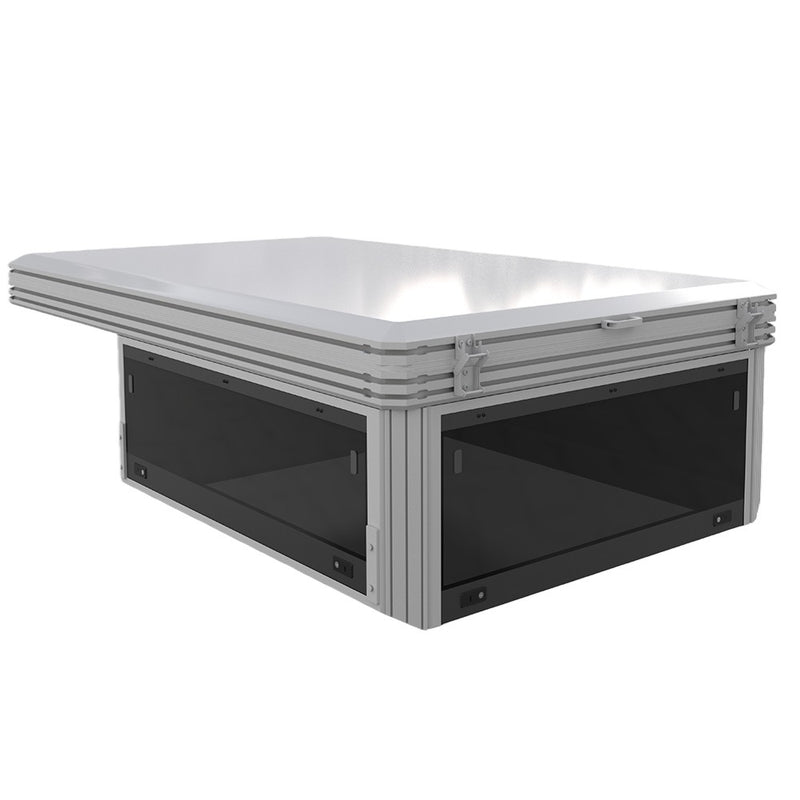
Panoramic glass
Smoked tempered glass in place of solid wall. The most light and the best view, with the top up or down. Sides only, or sides and rear. The panels are fixed and do not open, so ventilation still comes from the hatches and the three-layer tent windows.
What each one costs you inside
| Configuration | Light and air | Interior MOLLE |
|---|---|---|
| Standard hatch | Hatches only | Full |
| Gear panels | Hatches only, gear moves outside | Full |
| Sliding windows | Opening windows in the hatches | Limited around the windows |
| Panoramic glass | Most light and view, fixed panels | None on a glass wall |
Rear access
The back of the camper is either one hatch or two doors. The hatch is the standard build and the simplest thing that works. Barn doors change how you get in and what you can do with the opening, and they open up a couple of options the hatch does not have.
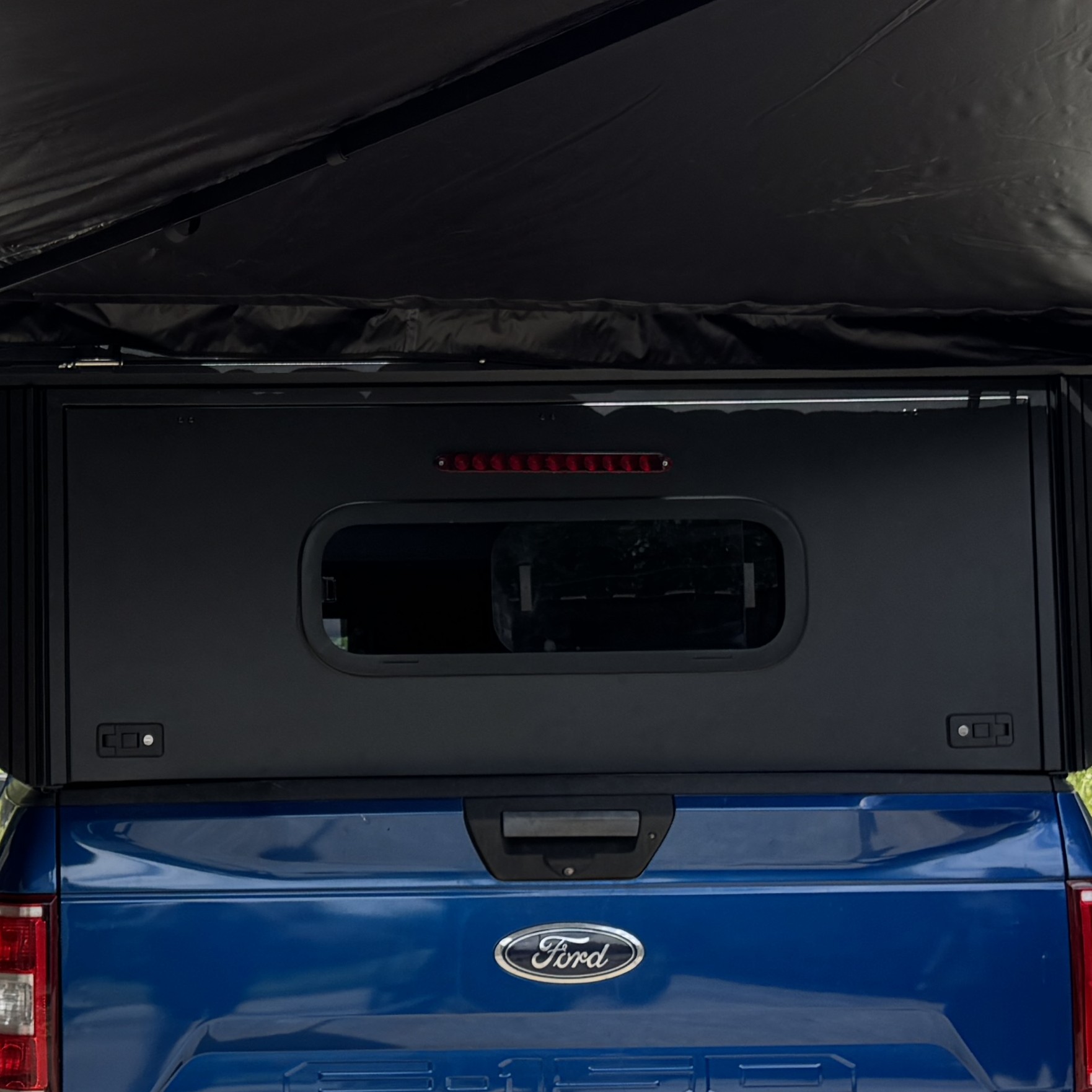
Standard rear hatch
One gull-wing hatch across the back, same as the sides. It lifts up and out of the way and doubles as cover over the tailgate while you are cooking or digging through gear in the rain. Fewest moving parts, fewest seals, lowest cost.

Barn doors
Two doors that swing out to the sides instead of one panel lifting overhead. Nothing sits above your head while you are loading, you can open one side and leave the other shut, and the doors give you two more surfaces to work with inside and out.
What you can add to barn doors
Two options that only exist on the door build, and they are designed to work together.
Smoked sliding windows
Tinted glass set into the doors that slides open, with a built-in screen. Light and cross-ventilation at the back of the camper without opening a door, and privacy from outside during the day.
Interior MOLLE panels
MOLLE on the inside face of each door, so the doors carry gear instead of just closing the hole. The panels are hinged, so they swing open and you can reach the window behind them without unloading anything.

Panels closed
MOLLE across the inside of both doors, ready for pouches and gear.

Panels open
Swing the panel out of the way to get at the sliding window, gear still attached.
Barn doors and panoramic glass on the rear wall are the same real estate, so you get one or the other. Glass on the sides only leaves the door option open. See side walls and hatches if you have not picked that yet.
Roof fan
Two MaxxAir options, both cut in, mounted, and sealed with Dicor self-leveling lap sealant at our shop on Monroe installs. Both take the standard 14 by 14 inch opening and run a 12 inch, 10 blade fan on a 12V sealed ball bearing motor.
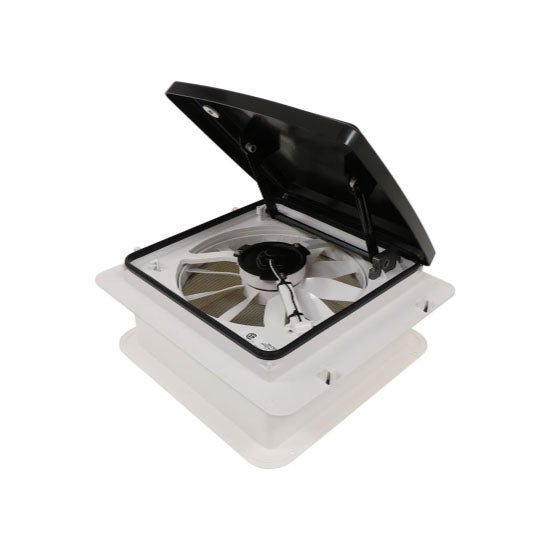
Mini Deluxe
MaxxAir 00-04401M · black lid, white frame
The low profile choice. Same opening and same fan as the Deluxe, with a shorter lid and simpler controls, so it sits about 2 inches lower on the roof. Four speeds, exhaust only, flush ceiling keypad, manual lift lid with twin arms and a lock. Over 900 CFM. It will run with the lid closed to move air around inside.
No rain shield, so the lid has to be closed in rain and while driving unless you add a MaxxAir FanMate cover, sold separately. No intake mode, no thermostat, no remote.
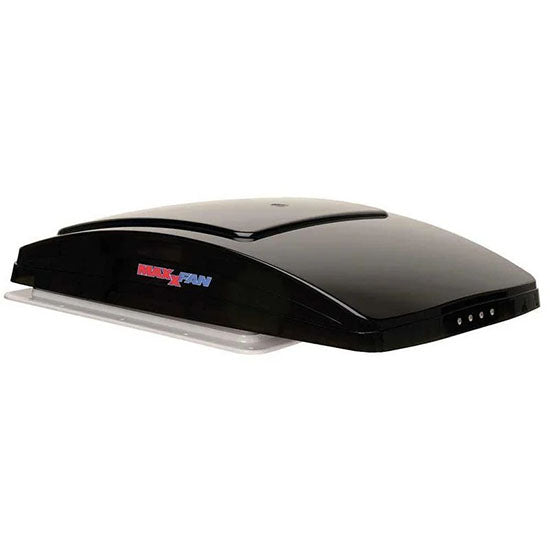
Deluxe
MaxxAir 00-07500K · smoke lid
Built-in rain shield, so it runs open in weather and while driving. Ten speeds, reversible for intake or exhaust, thermostat with auto fan control, and a powered lid you open and close from the ceiling keypad or the included programmable remote.
The trade is height. It adds roughly 5 inches with the lid closed, about 2 inches more than the Mini. If clearance is tight, take the Mini.
Side by side
| Mini Deluxe 4401M | Deluxe 7500K | |
|---|---|---|
| Speeds | 4 | 10 |
| Airflow | Exhaust only | Intake or exhaust |
| Rain shield | None, close the lid | Built in |
| Lid | Manual, twin arms, locking | Powered, keypad or remote |
| Thermostat | No | Yes, auto fan |
| Added height | About 3″ | About 5″ |
| Insect screen | Removable, no tools | Removable, no tools |
Both are fuse protected and both fit the standard 14 by 14 inch opening. Added height is measured with the lid closed. MaxxAir covers the Mini Deluxe for 2 years, with a lifetime limited warranty on the lid. Fan warranties are MaxxAir’s, not ours.
What we do
- Cut the 14 by 14 opening in the roof panel, centered. On a Frontier it goes in the pop-up roof panel.
- Mount the fan and seal it with Dicor self-leveling lap sealant.
- Leave the wire leads bare inside the camper so you can route them into your own 12V build.
What you do
- Pick the power source, the fuse, and where the switch or keypad wiring runs. Fuse it per MaxxAir’s instructions.
- Wiring is the owner’s responsibility and is not covered under the Cascadia warranty.
- Check the seal seasonally and reseal as needed, same as any roof penetration.
The fan cannot ship disassembled, the damage risk in transit is too high. We pre-cut the 14 by 14 inch opening at no charge, and you supply and install your own fan with Dicor lap sealant.
Modular camper jacks
A set of four heavy-duty jacks that lift the Summit off the truck and hold it there, so you get the truck back without needing a shop, a hoist, or four friends. Each jack has integrated wheels, so you can walk the camper around the garage once it is down.
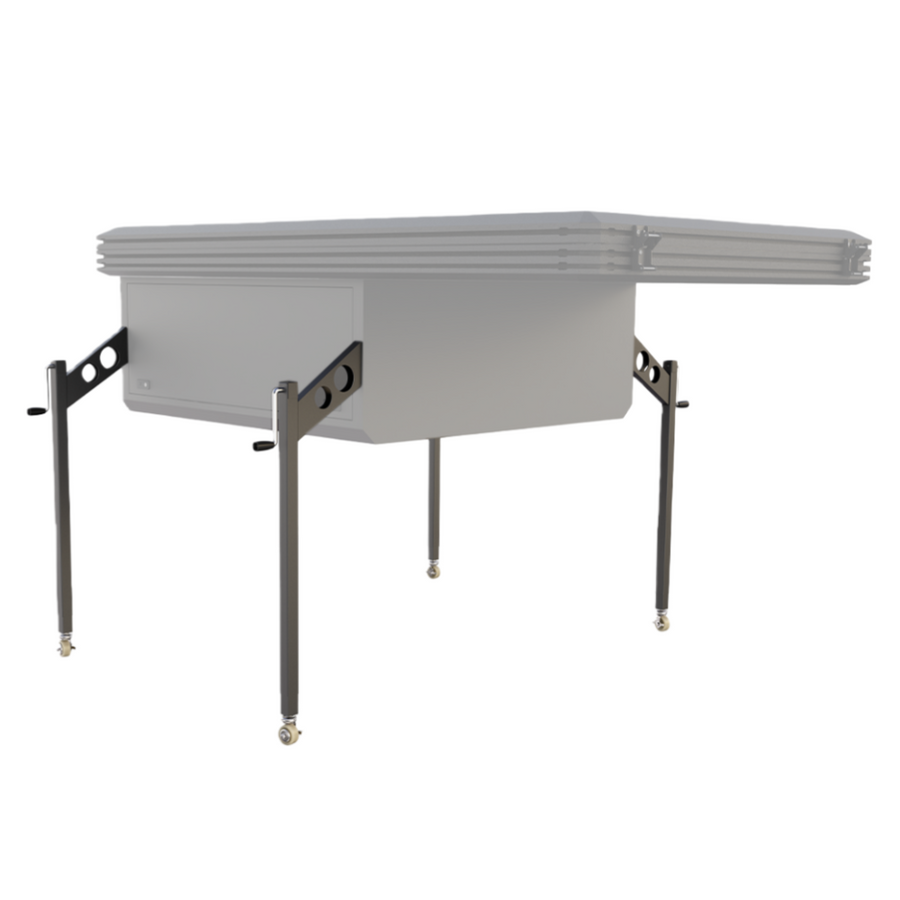
The jacks
Powder-coated steel, adjustable height, locking caster wheels at the base.
Set of four
One per corner, with integrated wheels and an adjustable height mechanism on each.
Built to your truck
We ask for a couple of measurements so the travel range matches your bed height.
Heavy-duty steel
High-strength steel under a corrosion-resistant powder coat, rated to hold the camper off the truck.
Every camper leaves here with jack mounting brackets already installed, so you are not locked in at order time. Buy the jacks with the camper or years later and they bolt straight to the brackets that are already on it.
Solar
Flush-mount monocrystalline panels bonded to the aluminum roof with no drilling, so the roof seal stays intact. Low profile, so they do not add meaningful height or catch wind.

400W, single panel
79″ × 39″ · OEM grade
One large panel, high-efficiency monocrystalline cells at 22 to 23 percent conversion. In good sun it puts down roughly 1600 to 2000 Wh a day. Simplest layout, fewest connections, and it leaves the rest of the roof open.

500W, two panels
2 × 250W · OEM grade
More total watts, split across two smaller panels. Allows for a 14x14 MaxxFan to be installed.
Numbers
| 400W | 500W | |
|---|---|---|
| Panels | 1 × 400W | 2 × 250W |
| Panel size | 79″ × 39″ | Two smaller panels |
| Working voltage | 18V | 18V per panel |
| Working current | 22.3A | 13.8A per panel |
| Open circuit voltage | 21.6V | 21.6V per panel |
| Short circuit current | 22.7A | 14.3A per panel |
What we do
- Flush mount to the aluminum roof with no drilling, so the roof stays sealed. Weatherproof and hail rated.
- Route the leads into the camper through a junction box.
What you do
- Pick up the leads inside the camper and run them into your own charge controller and battery.
Accessories
Four things you can add at order time or later. None of them change how the camper is built, so none of them are a now-or-never decision.

Roof rack bars
A pair of crossbars on the camper roof, positioned where you want them rather than at fixed points. Slide them apart for a long load, together for a short one, or set them to clear a roof fan.
Rated to 175 pounds dynamic across the two bars together. That is the moving-down-the-road number, so it is the one to size against when you are working out what you can carry up there. Remember that anything on the roof sits high and counts against payload the same as weight anywhere else on the truck.

Horizon 270° awning
Our own 270, and the one we run on our own trucks. It sweeps around the side and off the back for 120+ square feet of shade, and it goes up in about a minute. Four telescoping legs carry the load, so it stands on its own instead of hanging everything off your rack, and rivet-free pivoting rafter arms keep the canopy taut without the slop that shows up in riveted designs.
Three 5 ft LED strips are built into the arms, so there is no light bar to clip on and lose. The quick detach 5V USB controller switches between 2700K warm amber and 5000K daylight white with the dimmer built into the same puck. The canopy is 600D ripstop Oxford with a PU4000+ waterproof coating, and a pop-up stake at the low corner pushes water off instead of letting it pool.

| Horizon 270 | |
|---|---|
| Coverage | 196″ × 183″ deployed, 120+ sq ft of shade |
| Stowed | 101.5″ L × 7.5″ H × 7″ W |
| Weight | 70 lbs |
| Fabric | 600D ripstop Oxford, PU4000+ waterproof coating |
| Lighting | 3 × 5 ft LED strips, 2700K warm amber or 5000K daylight, dimmable |
| Wind rating | 25 mph freestanding, 40 mph staked and guyed |
| Mounting | Heavy duty steel brackets, black powder coat, roof rack or camper |
| Included | 4 stakes with guylines, 75 lb rope ratchet, 1000g PVC travel cover |

Awning side walls
They zip onto the Horizon 270 and close the shade in on all sides, so the awning becomes an actual room instead of a roof. Use it as a changing room, a place to get out of the wind, or somewhere to put a cot and a couple of extra people.
Total height and length is 102 inches, which clears any realistic awning mounting height on a truck or camper. Four roll-up canvas doors let you open whichever side you want, or roll them all up and leave the walls standing as a windbreak.
Thermal tent liner
A quilted insulated liner cut to fit the Summit tent. It holds heat in, cuts down the condensation you get from two people breathing in a small space overnight, and takes the edge off wind and rain noise. On the Summit it attaches with Velcro, so it goes in and comes out in minutes with nothing to unbolt.
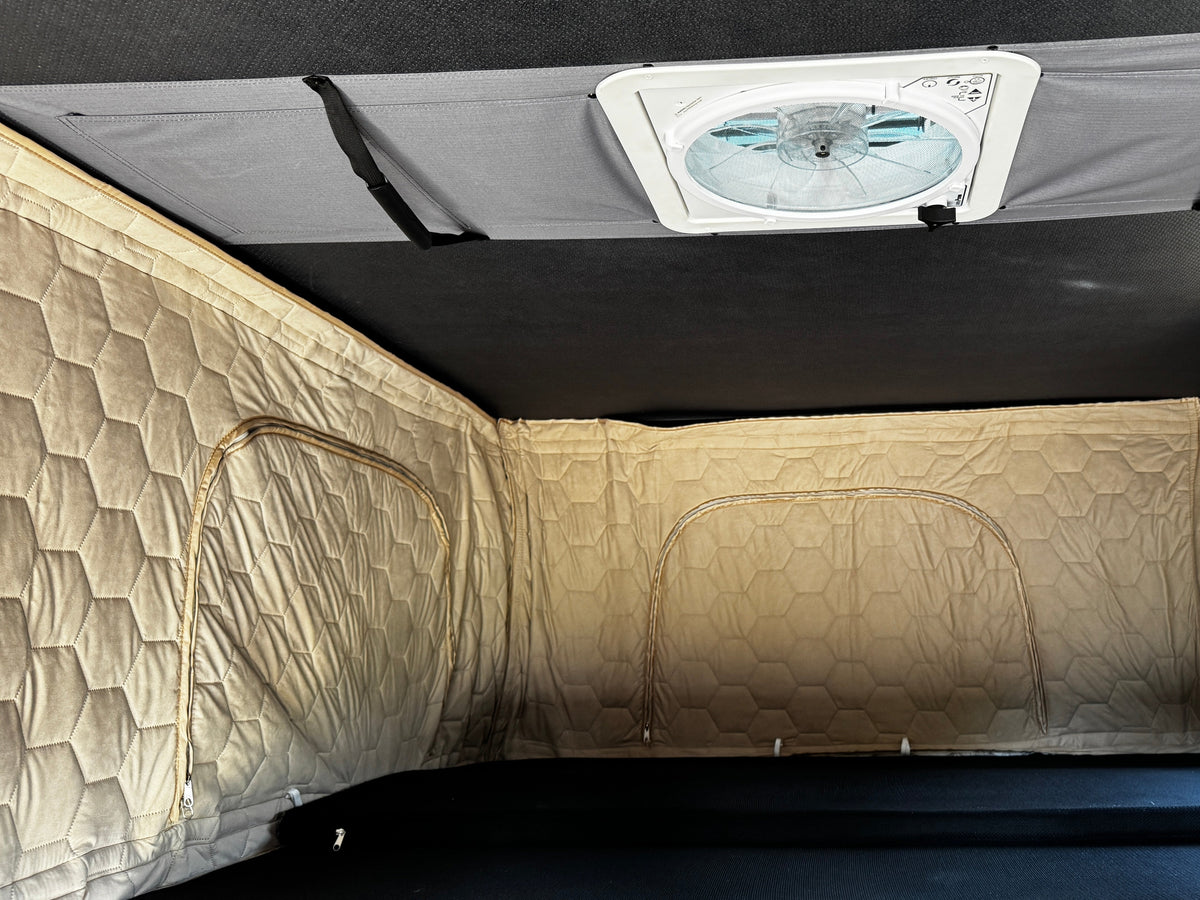
Installed
Precision-fit to the Summit tent, not a universal blanket.
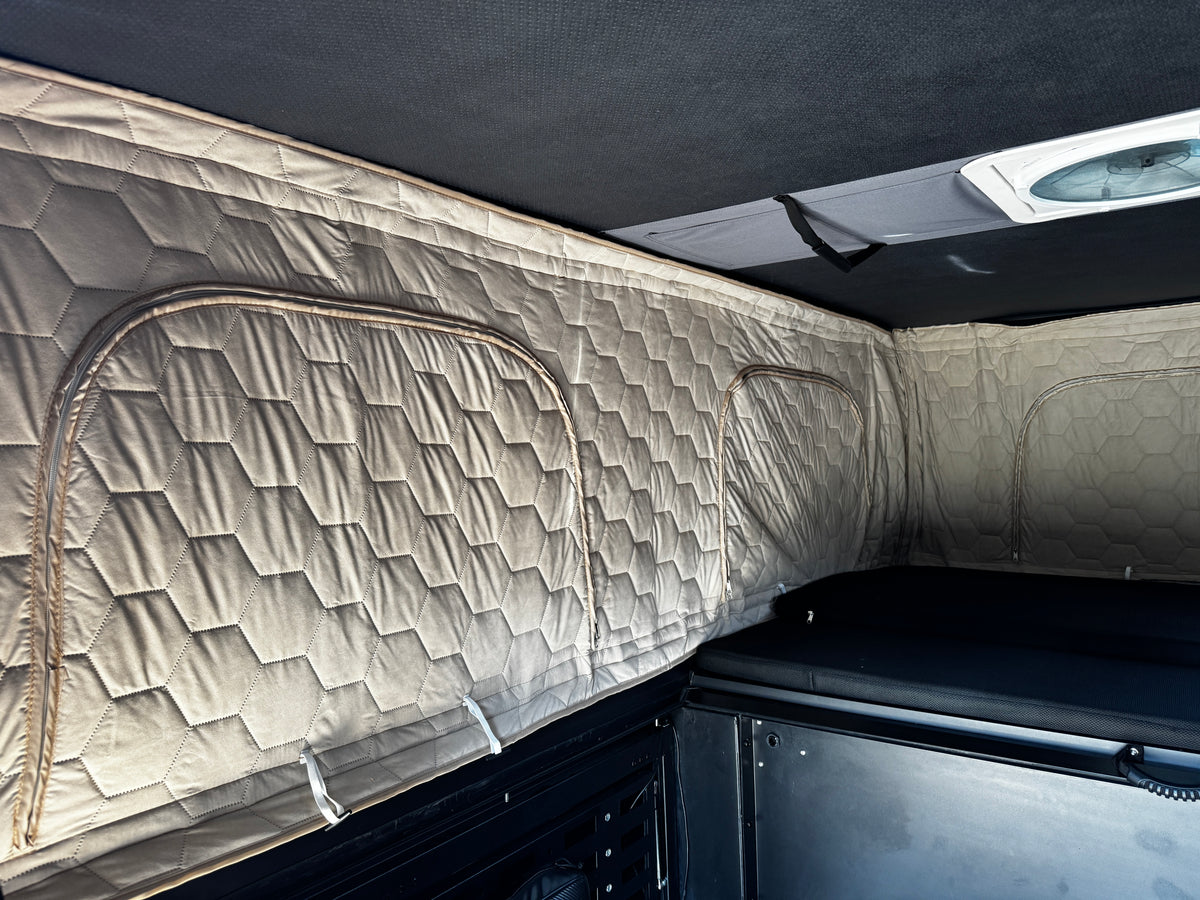
Quilted construction
Insulated quilting throughout, which is what does the work on heat and noise.
- You camp in shoulder season or winter, or anywhere the overnight low drops well below what you want to run a heater against all night.
- You wake up to damp canvas. The liner plus venting through the three-layer windows is the pair that fixes condensation.
- You are running a diesel heater and want it cycling less.
What people say once it is on the truck

★★★★★
Great experience buying from Cascadia. Their communication about the build and delivery was great and the install and after care has been top notch. Thank you, John and Eric!
Aaron

★★★★★
These guys are legit and stoked to support them. If they were in CA we’d be hanging out for sure! Can’t wait for more weekends and getting it all dialed in for some longer trips! Great group of guys to work with on your custom build!
Torey
Ready to build yours?
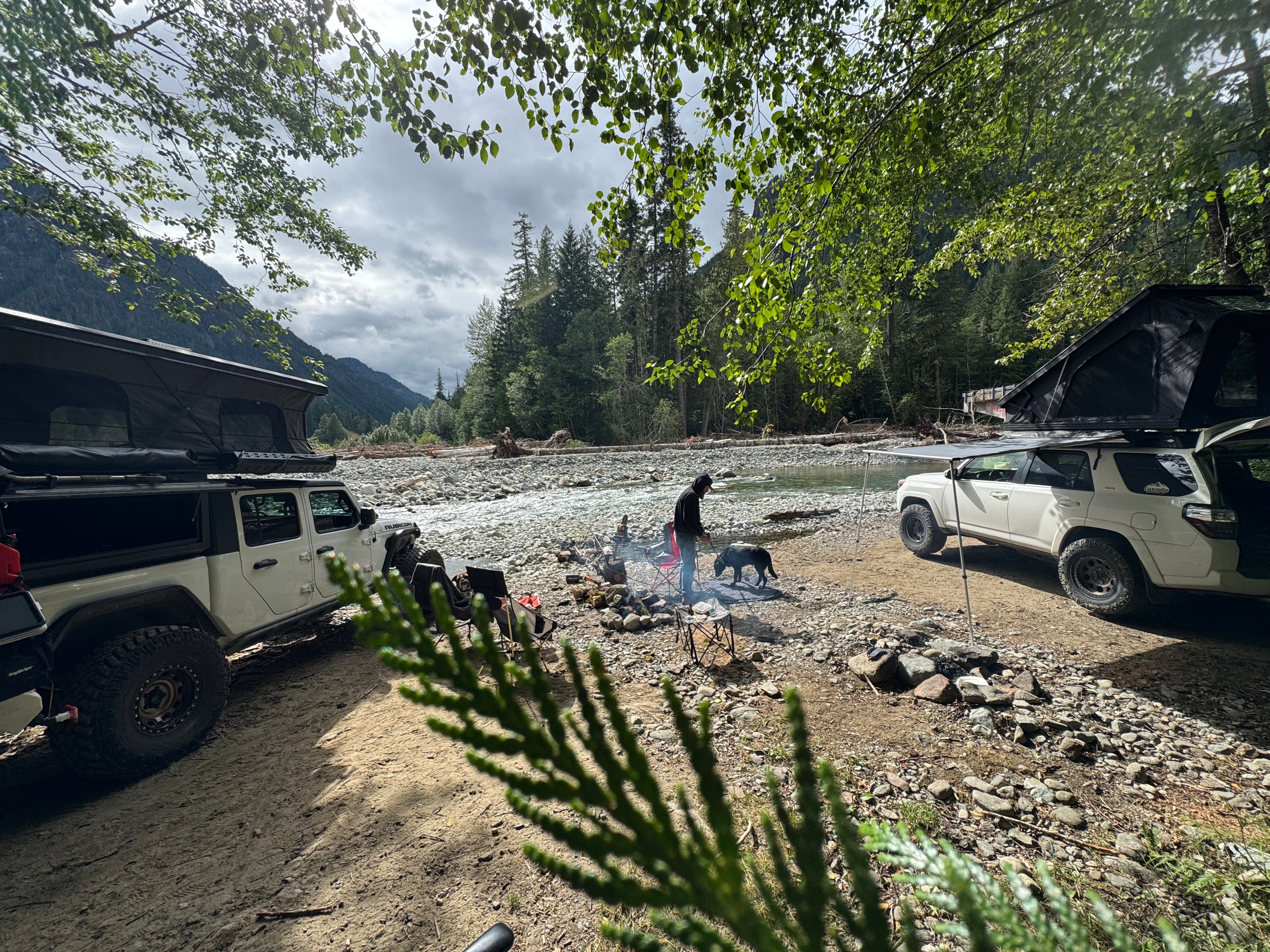
Pick your options and how you want it delivered, then place a deposit. We install it in Monroe or ship it disassembled, free either way. Current lead time is on the lead times page.